Are You Using Your Online Superpower Yet?
A simple guide for healthcare and wellness practitioners in the AI age
Introduction

AI isn’t replacing practitioners. It’s elevating the ones who communicate clearly, professionally and consistently.
What Is E-E-A-T and Why Does It Matter?


Search engines — and increasingly AI assistants — use E-E-A-T to decide which sites they trust, especially for sensitive topics like health and wellbeing. Here’s what each part means in practice:
Why This Matters Now More Than Ever
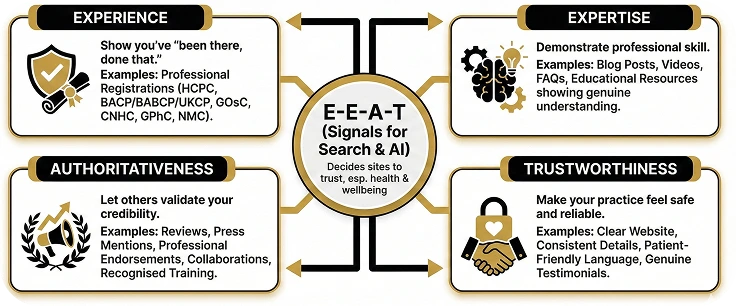
1. AI rewards practices that provide real value. Thin, generic content won’t rank — but genuine, experience-backed content will.
2. UK clients are cautious with their health. AI tends to prioritise trustworthy, regulated or professionally registered practitioners.
3. Local search is becoming personalised. AI tools remember interests and behaviours. If someone in Reading searched for “sports injury physio” last week, their next “physio near me” search may prioritise those results.
4. Small practices can now stand out more easily. You don’t need to compete with large clinics on budget — but you can outshine them with expertise, clarity and trust.
How to Improve Your E-E-A-T
1. Share Real UK-Based Stories (Experience)
AI responds well to real-world examples.
You can share:
• UK-based client success stories (with permission)
• Examples of typical outcomes
• A look at how a first appointment works
• Your approach to care
If you’re registered with a UK professional body, make it visible.
2. Explain Your Expertise in Plain English
Avoid jargon. Avoid long pages of dense text.
Examples of helpful articles:
• “Is osteopathy right for lower-back pain?”
• “What happens in a counselling session?”
• “Physio or sports massage — which do I need?”
UK clients want clarity. AI does too.
3. Build Local Authority (this matters a lot in small towns)
AI and humans trust social proof.
Ways to build authority:
• Encourage Google reviews (they matter enormously)
• Partner with local gyms, yoga studios or wellbeing centres
• Share short expert tips on Instagram or Facebook
• Be featured in community newsletters or local press (Reading Chronicle, Newbury Today etc.)
Small local signals go a long way.
4. Make Your Practice Feel Trustworthy
Trust is everything in UK health and wellbeing.
Checklist:
✔ Clear pricing
✔ Professional photos
✔ Up-to-date opening hours
✔ Statement of your qualifications
✔ Easy contact details
✔ GDPR/privacy notice
✔ No outdated blog posts from 2019
✔ No stock photos of American clinics
A professional-looking website builds trust before the client ever speaks to you.
5. Make Your Content AI-Friendly
AI needs structure.
Do this:
• Add FAQ sections (“How long is a session?”, “Do I need a GP referral?”, “Is parking available?”)
• Keep paragraphs short
• Use headings like you’re writing a magazine
• Use bullet points
• Add schema markup (your web designer can do this easily)
• Use UK spellings (AI detects inconsistencies)
Structured = understandable = recommended.
6. Keep Your Website Fresh
AI likes recent updates.
Quick wins:
• Update your homepage seasonally
• Refresh old blog posts
• Write short posts on common UK seasonal issues:
• Winter stiffness
• Marathon training
• GCSE stress
• Hay fever season
• Add new client testimonials regularly
You don’t need to post weekly — just keep things living and breathing.
What Happens If You Ignore E-E-A-T?
You risk:
• Drop-offs in Google visibility
• AI choosing another practitioner over you
• Losing enquiries to better-optimised local competitors
• Appearing outdated or less credible
Clients want reassurance before they even make an enquiry. AI wants the same thing.
Final Thoughts — E-E-A-T + AI = A Big Advantage for Small UK Practices
AI isn’t replacing practitioners. It’s elevating the ones who communicate clearly, professionally and consistently.
When your website reflects your real-world expertise, you’ll be chosen — by people and by AI.
Start small: Look at your “About Me” page today. Does it show your qualifications, your experience, and your approach in a way that feels genuinely you?
If not, that’s the easiest superpower to switch on.

Company
Case Studies
Articles
© 2025 The Ai Web Company. All rights reserved.


